
KEEP IT STRONG. STAY SAFE ON THE ROAD.
Proper trailer maintenance helps prevent wear, unexpected repairs and problems on the road. Discover what you can check yourself, when professional servicing is advisable and why annual servicing matters for your Hapert warranty.
How often should a trailer be serviced? Check essential components regularly and before long journeys. We recommend a professional inspection at least once a year. If you have registered your Hapert for the extended10-year chassis warranty, annual servicing by a Hapert dealer is required to keep that warranty valid, subject to the applicable terms.
What parts of a trailer need maintenance?
A trailer is subjected to considerable stress on the road. Weight, vibrations, braking, weather, dirt and prolonged periods of inactivity all affect parts such as tyres, brakes, bearings, the coupling and lights.
Regular checks are especially important if you use your trailer every day, carry heavy loads or cover long distances.
Maintenance does not simply mean replacing worn parts. Identifying problems early can help prevent more extensive damage and keep your trailer dependable.
On this page, we explain step by step what maintenance a trailer needs, what you can check yourself and when you should consult a specialist.
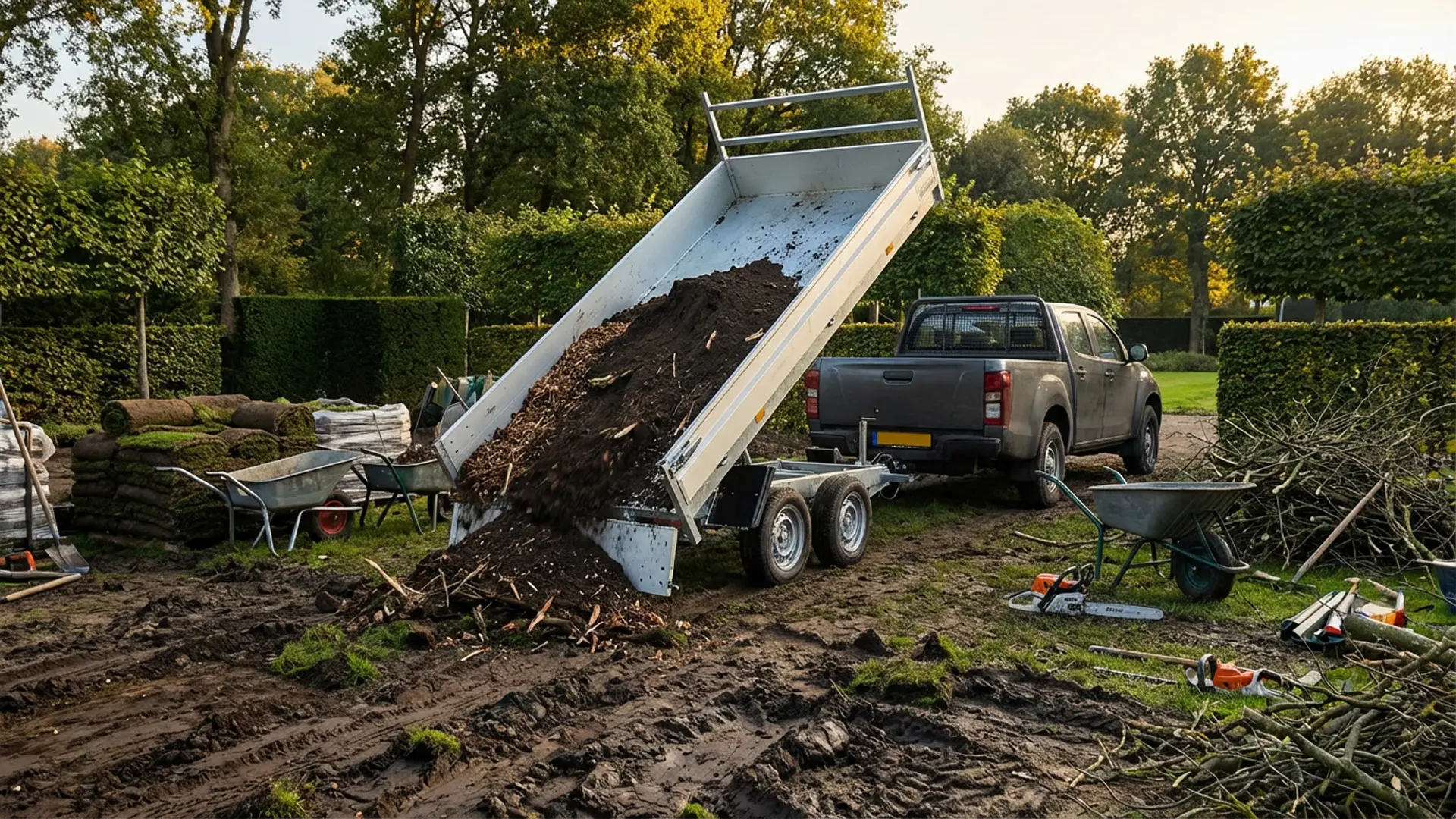
Trailer maintenance schedule.
Not every component needs a workshop visit every week. You can carry out several basic checks yourself.
Use this schedule as general guidance. Usage, loads, mileage and operating conditions determine whether extra inspections are necessary. Always follow the instructions for your specific trailer.
A thorough trailer service looks beyond the tyres.
From the braking system and coupling to the chassis and lighting, several components together determine how safely, steadily and reliably your trailer runs.
Check the brakes and overrun braking system
On a braked trailer, the braking system is one of the most important components to inspect regularly.
When the towing vehicle brakes, the overrun coupling compresses and operates the trailer's wheel brakes through the braking mechanism.
Do not ignore braking problems. Wear or incorrect adjustment can affect braking performance.
Watch out for:
- Jerking when braking
- Delayed or inconsistent response
- Squealing or grinding noises
- A parking brake that does not hold properly
- An overrun mechanism that does not move smoothly
- Damaged or stiff brake cables
- Wear on the breakaway cable
Tyres and tyre pressure
Tyres deserve particular attention during trailer maintenance. A trailer may stand unused for a long time and then suddenly carry a heavy load.
Incorrect tyre pressure can lead to increased wear, heat build-up and less stable handling.
Tyre tread and condition must comply with the rules in the country where the trailer is used and, where relevant, registered. There is no single minimum tread-depth figure that can safely be applied to every trailer in every EU country. Check the applicable national requirements; never use damaged or unsafe tyres.
Check regularly:
- Tyre pressure
- Tread depth
- Cracks and ageing
- Damage
- Bulges
- Uneven wear
- Valves
- Wheel rims
Wheel bolts, wheel bearings and axles
The wheels, bearings and axles continuously support the weight of the trailer and its load.
A humming, grinding or clicking noise from a wheel may indicate wear. An unusually hot wheel hub also needs attention.
Wheel bolts must be tightened to the correct torque. Consult the technical specifications for your trailer.
Have the following checked:
- Play in wheel bearings
- Unusual noises
- Wheels that do not rotate smoothly
- Damage or deformation
- Condition of axles and mountings
- Correct wheel installation
Coupling and breakaway cable
The connection between the towing vehicle and trailer must be secure on every journey.
Before setting off, check that the coupling is correctly locked onto the towball and shows no visible damage.
On a braked trailer fitted with a breakaway cable, the cable activates the trailer brakes if the trailer becomes detached. Attachment requirements may vary by country and equipment.
Check before departure:
- Coupling correctly locked
- No visible damage
- Breakaway cable properly attached, where fitted
- Breakaway cable undamaged
- Electrical plug securely connected
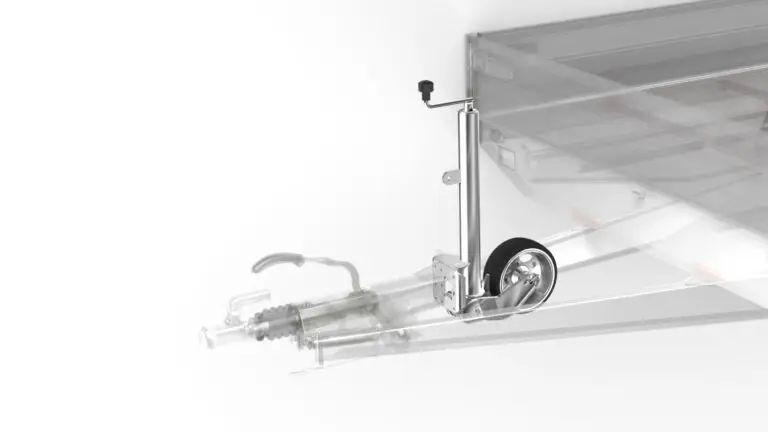
- Jockey wheel fully raised and secured
Lighting and electrical system
Working lights are essential for visibility and must meet the vehicle requirements applicable in the country of use. EU type-approval rules provide a common framework, while some operational requirements vary nationally.
Faults can result from dirt, moisture, corrosion, damaged cables or poor electrical connections.
Check, where fitted or required:
- Rear position lights
- Brake lights
- Direction indicators
- Number-plate light
- Rear fog lamp
- Marker lamps
- Reflectors
- Plug and wiring harness
Inspecting the chassis
The chassis is the structural foundation of your trailer. Check it regularly for visible damage and deformation.
If you notice damage and cannot assess whether it affects structural integrity, have a Hapert dealer inspect the trailer.
Watch out for:
- Visible damage
- Deformation
- Loose fasteners
- Damaged connections
- Unusual wear
- Damage caused by overloading
Floor, sideboards, catches and hinges
Good maintenance involves more than the mechanical components beneath the trailer.
Inspect the load bed and body as well. A damaged or weakened floor can affect safe use and load securing.
Check:
- Damage to the floor
- Soft or weakened areas
- Loose parts
- Wear around mounting points
- Catches
- Hinges
- Doors and tailgates
Lashing points and loading equipment
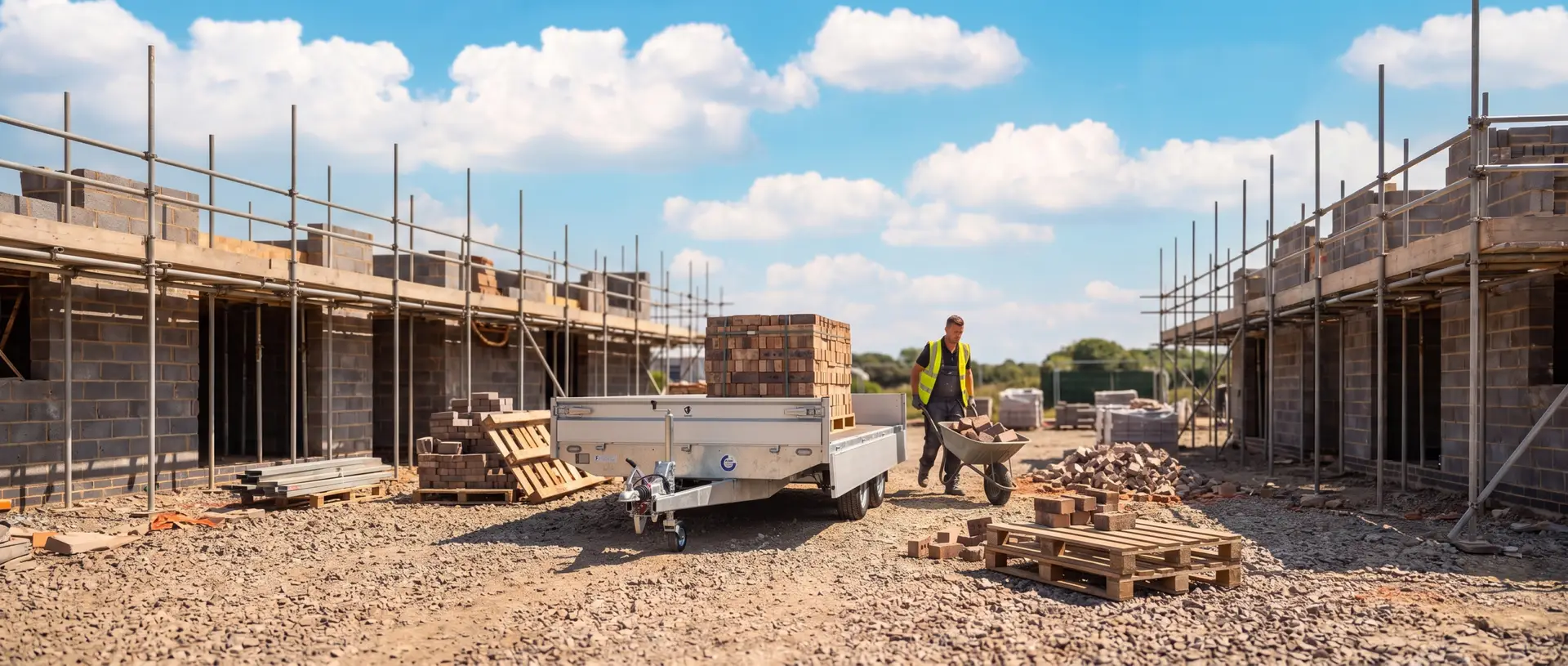
Do you transport machinery, building materials or other heavy loads? Check the equipment used to secure the load.
A well-maintained trailer only contributes to safe transport if the load can also be secured correctly.
Watch out for:
- Bent lashing points
- Loose fasteners
- Damaged eyes or rails
- Wear around mounting points
- Damaged loading ramps or equipment
Trailer repairs: what can go wrong?
Even with good maintenance, parts can wear out or become damaged. Trailer repair starts with identifying the problem and its underlying cause. You can carry out some checks yourself, but safety-critical repairs should be entrusted to a qualified specialist.
Common problems and repairs
| Problem | Possible cause | What can you do? |
|---|---|---|
| Brakes jerk or perform poorly | Wear, incorrect adjustment or a fault in the overrun mechanism | Have the brakes, cables and overrun braking system inspected professionally. |
| Lights do not work | Dirty plug, poor earth connection, moisture or damaged wiring | Check the plug and connection; have faulty wiring or lights repaired. |
| Humming or grinding noise at a wheel | Possible worn wheel bearing or another wheel or brake fault | Have the bearing, hub and brakes checked. Do not continue towing if there are significant symptoms. |
| Trailer sways | Incorrect loading, tyre pressure or a mechanical defect | Check load distribution and tyres; have persistent instability investigated. |
| Coupling does not lock properly | Dirt, wear or damage | Do not use the trailer until the coupling locks securely. |
| Load floor is damaged | Wear, moisture, impact or overloading | Have a specialist assess whether repair or replacement is needed. |
| Jockey wheel is difficult to turn | Dirt, bending or wear | Check the jockey wheel and have it repaired or replaced if necessary. |
| Chassis is cracked or deformed | Impact, overloading or other damage | Have the structure assessed; do not carry out structural repairs yourself. |
If braking changes, the coupling is loose or damaged, a tyre is seriously damaged, a wheel hub overheats or structural damage is visible, do not use the trailer until a qualified professional has assessed whether it is safe to tow.
Can you repair a trailer yourself?
You can clean electrical contacts, test the lights or check tyre pressure yourself. Work on brakes, wheel bearings, couplings, axles and load-bearing structures requires appropriate expertise, tools and specifications. Use a specialist workshop for these repairs.
Where can you have your Hapert repaired?
A Hapert dealer can advise on diagnosis, servicing and repairs for your trailer. The dealer can determine which work is required and which parts are suitable. Ask about the services offered and request a quotation in advance.
How much does trailer maintenance or repair cost?
Costs depend on the type of trailer, its condition, the number of axles and the components requiring attention.
Cost of a routine service
A periodic service may include labour, inspection of the braking system, work on multiple axles and replacement parts. A braked trailer generally has more brake components to inspect than an unbraked trailer.
Cost of trailer repairs
Repairing an electrical plug or lamp involves different work from replacing bearings, brake components or a damaged floor. Chassis or axle damage may require a more extensive diagnosis first. Giving a fixed price without inspection could therefore be misleading.
Want to know how much a repair will cost? Contact a Hapert dealer with your trailer model, year of manufacture, a description of the problem and photographs if possible. Ask for an itemised quotation.
What maintenance does your Hapert model need?
The basic checks apply to every trailer, but the body and equipment determine what additional attention is needed.
Box and flatbed trailers
In addition to the running gear and brakes, inspect the sideboards, catches, floor and securing points.
Tippers
Also inspect the hydraulics, hoses, cylinder, hinges and tipping function. Follow the model-specific instructions.
Transport trailers
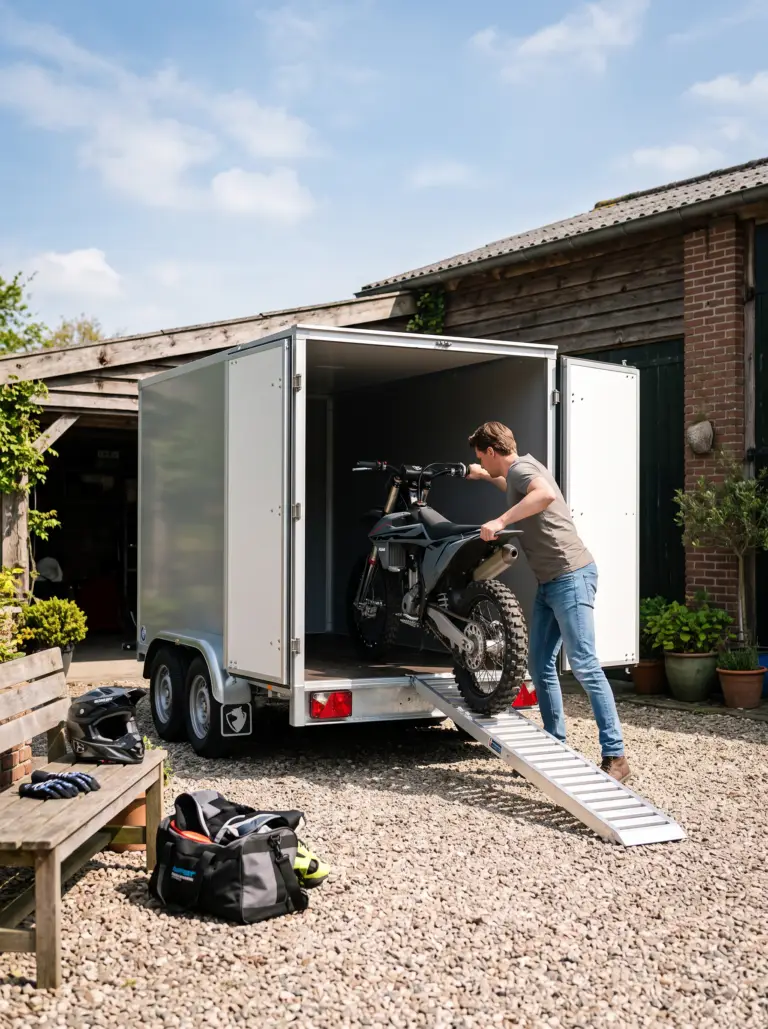
Also check the ramps, tilting mechanisms, supports and load-securing equipment.
Enclosed trailers
Inspect doors, seals, hinges and panels. On refrigerated versions, also inspect the relevant refrigeration equipment in accordance with its instructions.
Use the manual and specifications for your particular model. Not every Hapert has the same axles, brake components or options. If in doubt, ask a Hapert dealer to identify the maintenance work required.
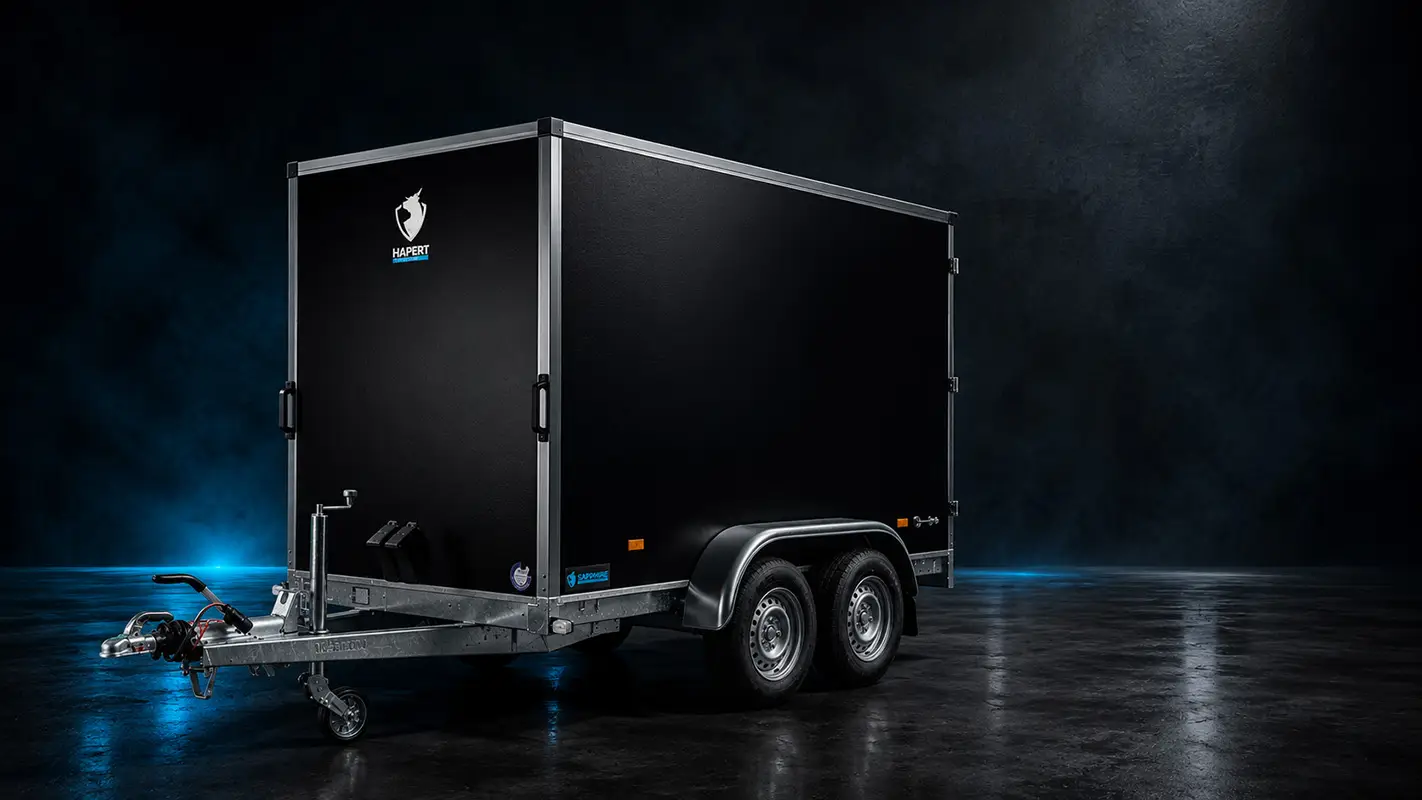
You can monitor these points yourself.
Not every check requires a workshop visit. You can inspect and test several important items regularly yourself.
Some tasks are best left to a professional.
Your own checks do not replace a professional service. Work on brakes, bearings and structural components requires technical expertise.
When should you contact a dealer immediately?
Do not wait for the next scheduled service if your trailer starts behaving differently from normal.
Every trailer has a different working life.
A trailer used lightly a few times a year is subjected to different conditions from a tipper carrying heavy materials every day.
High mileage
More kilometres mean more movement, loads and wear.
Heavy loads
Heavy loads place additional demands on brakes, tyres, axles and chassis.
Harsh conditions
Mud, dust and poor roads can accelerate wear and contamination.
Long periods of inactivity
Even when parked, tyres, moving parts and electrical systems need attention.
Cleaning helps keep your trailer in good condition.
Dirt, moisture and salt can place unnecessary strain on components. Regular cleaning is therefore a simple but important part of good maintenance.
After use, remove mud, sand, leaves and material residues. Pay particular attention to places where dirt and moisture can accumulate.
If the trailer has been driven in winter conditions or on salted roads, rinse off residues promptly.
Do not direct a high-pressure jet at bearings, seals, plugs or electrical connections.
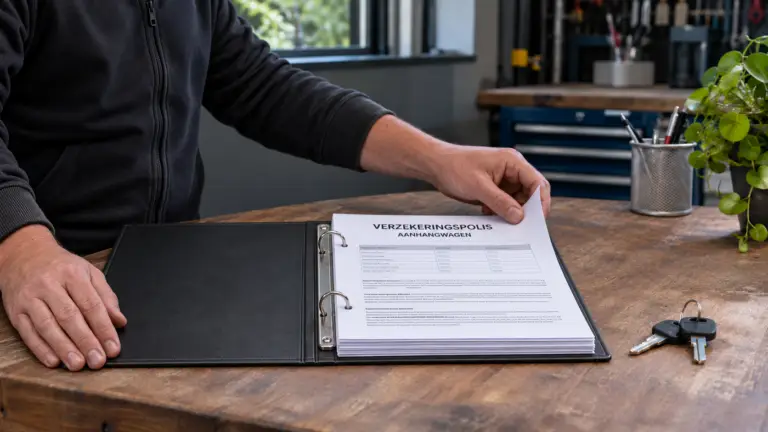
Annual servicing is part of the warranty requirements.
If you register a new Hapert in accordance with the applicable terms, you may qualify for a 10-year chassis warranty plus one additional year of manufacturer's warranty.
To keep the extended chassis warranty valid, you must have your trailer serviced every year by a Hapert dealer.
The dealer then records the service in the Hapert system.
Why have your trailer serviced by a Hapert dealer?
A Hapert dealer is familiar with the design, components and maintenance requirements of Hapert trailers.
During a service, the dealer can check components for wear, damage and technical faults.
Frequently asked questions about trailer maintenance and repair.
Clear answers to common questions about servicing, tyres, brakes and the Hapert warranty.
We recommend having your trailer inspected professionally at least once a year. More frequent maintenance may be advisable for daily or heavy use. Always follow model-specific instructions.
There is no single EU-wide annual servicing obligation for all light trailers. National roadworthiness and inspection rules vary. Annual servicing by a Hapert dealer is a condition of the extended 10-year chassis warranty, subject to the applicable warranty terms.
Typical checks include tyres, wheels, bearings, axles, brakes, coupling, breakaway cable where fitted, lights, chassis, floor and mounting points.
You can carry out basic checks yourself. Brakes, bearings and structural parts are best assessed by a qualified professional.
There is no single EU-wide tread-depth answer that covers every trailer and every country. Requirements can depend on vehicle category and national law. Check the rules applicable where the trailer is used and, where relevant, registered, and replace unsafe tyres.
Yes. To retain the extended 10-year chassis warranty, annual servicing must be carried out by a Hapert dealer and recorded, in accordance with the warranty conditions.
The cost depends on the trailer model, number of axles, braking system, condition and parts required. Ask a Hapert dealer for a current quotation for your specific trailer.
Costs vary significantly by fault. Repairing a light or plug differs from replacing brakes, wheel bearings or a floor. After diagnosis, a dealer can provide an itemised quotation.
Possible signs include jerky or delayed braking, squealing or grinding noises and a parking brake that does not hold properly. Have the brakes and overrun mechanism checked; the symptoms can have other causes.
Humming or grinding noises, noticeable play or an unusually hot hub may indicate a problem. The bearing is not always the cause. Have the wheel, hub and braking system inspected by a professional.
First check that the plug is fully connected and that the contacts are clean and dry. Faulty lamps, a poor earth connection or damaged wiring are other possible causes. Do not tow a trailer if legally required lights are not working.
You can often carry out minor checks such as measuring tyre pressure and cleaning electrical contacts. Repairs to brakes, bearings, couplings, axles and chassis require specialist knowledge and appropriate technical specifications.
A trailer must be roadworthy and comply with the rules applicable in the country of use. If the brakes, coupling, tyres, lights or load-bearing structure are defective, establish whether towing is safe and lawful before using it. If in doubt, do not tow.
Before using it again, inspect the tyres for pressure, damage and ageing, test the lights, check the coupling and cables, and have brakes and bearings checked if in doubt. Inactivity does not automatically prevent deterioration.
EU Directive 2014/45/EU requires periodic testing for trailers in categories O3 and O4 (over 3,500 kg maximum mass). It does not establish a uniform annual inspection requirement for all light O1 and O2 trailers (up to 3,500 kg). Individual Member States may apply additional national inspection rules. Check the rules for the country of registration and use.
In addition to the usual checks, inspect the hydraulic system, hoses, cylinder, hinges, tipping operation and safety devices. Follow the instructions for your particular model.
Use the Hapert dealer locator to find a dealer near you. Ask in advance whether they offer the repair you need, whether parts are available and what the work is likely to cost.
Have cracks, deformation, damaged joints or suspected overload damage assessed by a specialist. Do not attempt welding or structural repairs before the manufacturer or a competent specialist has determined the correct repair method.
Based on engineering, legislation and practical experience.
- Hapert Trailers – Warranty Registration and annual servicing conditions. View the Hapert warranty
- Hapert Trailers – Brake maintenance More information about trailer brakes. View brake maintenance
- European Union – Roadworthiness testing Directive 2014/45/EU: minimum EU rules on periodic testing, including trailer categories O3 and O4. National rules may be stricter. View EUR-Lex
- AL-KO Vehicle Technology Technical information on overrun braking systems. View AL-KO
Keep your Hapert strong, safe and dependable.
Maintenance should not begin only when something breaks. Regular checks and professional servicing help detect wear at an early stage.