


Trailer lighting and electrics: what is mandatory and what is worth having?
Good lighting and a reliable electrical connection should not be seen as accessories; they are essential for safety. A well-lit trailer helps prevent not only fines, but also accidents. In this article, we explain what mandatory trailer lighting is required, which extras are a smart choice and what to look out for in your trailer’s electrical system. We also refer to the Hapert wiring diagram, so you always know how the wiring should be connected.
What trailer lighting is required by law?
To start with, every trailer used on the road must have properly working lighting. The law requires every trailer to have red rear lights, brake lights, indicators and number plate lighting. For smaller trailers up to 750 kg, a rear fog light is mandatory. For heavier trailers, this also applies if they were first used on the road after 1998.
The dimensions of the trailer also play a role. A model wider than 1.60 metres must have front position lights. If the trailer is wider than 2.10 metres or longer than 6 metres, marker lights are mandatory. All lighting must be securely mounted, remain clearly visible and be technically in good condition. Loose cables, dull lamp lenses or lights that only partly work are not an option; they are asking for trouble. That is why it is important to know exactly what mandatory trailer lighting applies to your trailer.
Extras that make the difference
At Hapert, we already supply more as standard than what is legally required. Not because we have to, but because we believe reliability starts there. Still, there are a few choices that give you extra comfort and safety as a user.
More and more people are choosing LED lighting. These lights are more energy-efficient, more resistant to vibrations and last much longer than traditional bulbs. The connection is also crucial. A solid 13-pin plug helps prevent faults and ensures a stable connection with the car. Many lighting problems are caused by poorly connected or corroded plugs, so a reliable connection quickly pays for itself.
The type of wiring and the earth connection also play a role. A properly installed wiring harness protects against water and wear, helping to prevent faults on the road. A poor earth connection is often the cause of flickering or non-working lights. And finally: a quick check before departure works wonders. Checking whether all lights are working and whether the plug is properly connected takes hardly any time, but prevents a lot of hassle on the road.
With the right extras, mandatory trailer lighting becomes part of a complete, reliable lighting system.
The wiring diagram
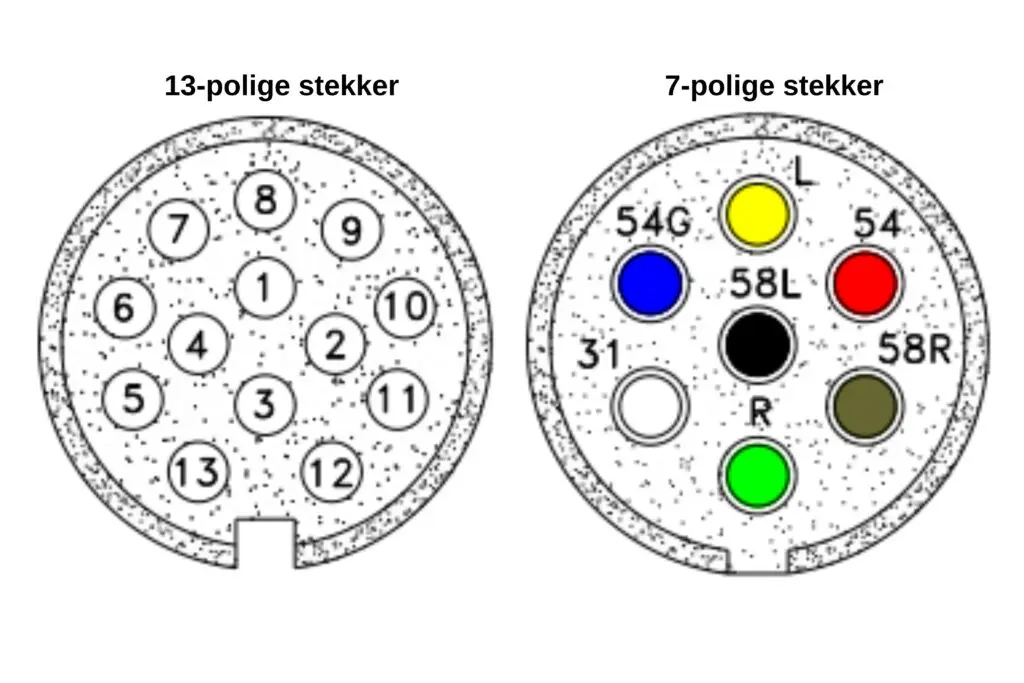
To make sure the lighting works properly, it is useful to know how the wiring is connected. The Hapert wiring diagram shows exactly which pin in the plug is intended for which function. This helps prevent voltage from accidentally being applied to the wrong wire.
https://hapert.com/wp-content/uploads/2023/12/Aansluitschema.pdf
Modern trailers almost always use a 13-pin connection, because it supports more functions than the older 7-pin version. It is important to follow the wire colours correctly and make sure the earth connection is firmly attached. A loose contact or a little moisture in the plug can already be enough to make the lighting flicker or fail. Therefore, regularly check the wiring harness for wear or damage, and test whether all lights work properly after every adjustment.
A correct wiring diagram helps ensure that your mandatory trailer lighting continues to work safely and reliably.
Why quality in lighting pays off
At Hapert, we believe quality is found in every detail; from the steel construction to the smallest cable in the electrical system. Reliable lighting and electrics mean fewer faults, less maintenance and, above all, more peace of mind. If you choose strong components, watertight connections and durable materials, you save time and money in the long run.
A well-maintained trailer also presents a professional appearance. A clearly visible rear light or a neat LED strip makes a real difference in appearance, especially for companies that are on the road with their trailer every day. And if you ever want to sell your trailer, a faultless electrical installation is always a plus.
Choosing quality ensures that your mandatory trailer lighting does more than meet the rules; it also supports safety, reliability and a professional look.
The Hapert checklist before departure
Before you hit the road, quickly check the following points:
- Do all rear lights and brake lights work on both the left and right?
- Do the indicators flash as they should?
- Is the number plate lighting working?
- Does the rear fog light work when needed?
- Are marker lights present and intact on wider trailers?
- Is the plug firmly connected and is the cable undamaged?
- Has the earth connection been checked?
A short check, but a big difference in safety. It is also the simplest way to make sure your mandatory trailer lighting is working correctly before every journey.
Ask a dealer for advice
Our dealers have many years of experience with our products. If something is not working, they are there to help you. They can provide you with an adapter, check the wiring and carry out repairs if needed. With our dealers, you are always in good hands. Find a dealer near you below to make your trailer safe and visible again.