Buying a trailer? Here's what to look out for
5 important points to consider when buying a trailer
Planning to buy a trailer and not sure where to start? Understandable, there are so many different types of trailers on the market. To help you get started, we at Hapert have listed some key points. That way you know what to look out for when buying a new trailer. That way you know what to look for when buying a new trailer.
Key points
1. Braked or unbraked trailer
There are two different types of trailers: braked and unbraked trailers. An unbraked trailer does not have its own braking system and thus relies on the towing vehicle’s braking system. A braked trailer does have a braking system and can therefore tow a heavier load. An unbraked trailer has a maximum authorised mass of 750 kg. With a braked trailer, the permitted weight can be significantly higher. At Hapert, all trailers are braked as standard.
2. Type of load and transport
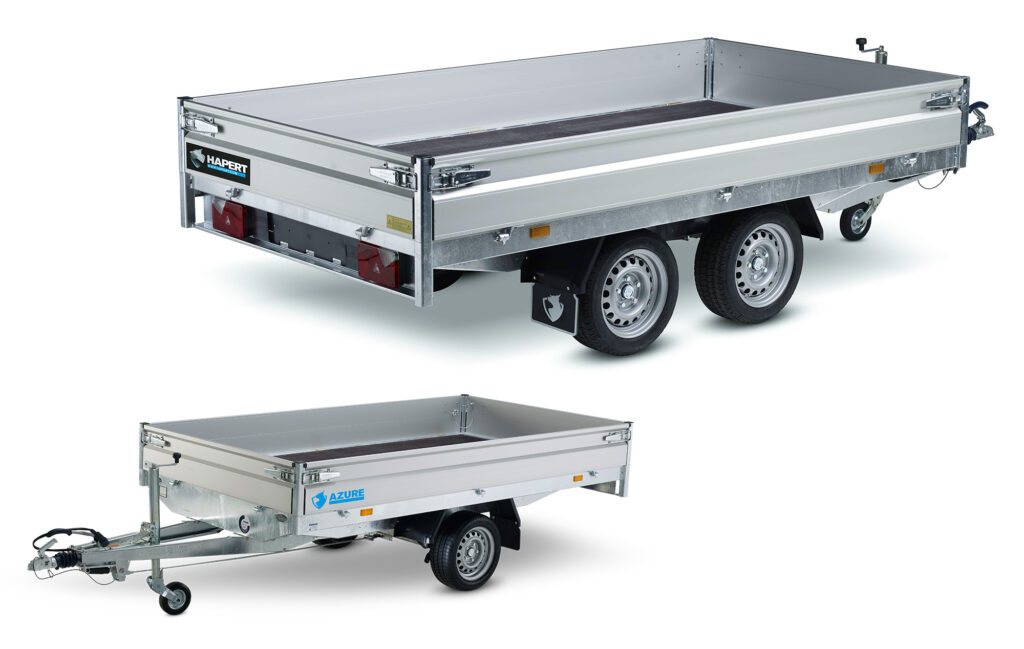
What kind of trailer you need depends largely on the type of transportation and the type of load. If you want to transport temperature-sensitive goods, then choose a refrigerated trailer. If you need a trailer for transporting cars or machinery, then you choose an car transporter. And if you are looking for a trailer that allows you to transport all kinds of materials, such as bulky waste or yard waste, an multi-purpose trailer is great for that. It can be fitted with a high cover or load net when you want to protect the cargo from the elements during transport.
3. Maximum payload
The maximum payload of your trailer also depends on several factors:
Maximum towing capacity of your vehicle
Your car has a maximum weight it can pull. You can find out your car’s maximum towing capacity via ovi.rdw.nl or on your registration certificate. Keep in mind that this weight includes the weight of the trailer (not just the weight of your load).
Your driving licence
Do you have a category B driving licence? Then you may tow a trailer up to 750 kg or a trailer with more than 750 kg, if the total weight of your car and trailer remains under 3500 kg.
A category B+ driving licence allows you to drive a car with trailer when the total weight of car + trailer remains under 4250 kg.
If you hold a category BE driving licence, you may tow a trailer of up to 3500 kg (trailer weight plus load) and under certain conditions a trailer of more than 3500 kg.
So your driver’s license is also important when choosing a new trailer.
Weight of load
The weight of the load you’re hauling also plays a role in the maximum payload of your new trailer. Are you a landscaper and primarily transport green waste? Then your payload will never be very high, so you can choose a trailer with a relatively low maximum payload. As a paving contractor, you are likely to transport heavier loads and a trailer with a higher payload is recommended.
4. Available options
Each trailer can be expanded with various options in addition to the standard equipment. A Hapert flatbed trailer is available with or without a front rack, you can choose a standard floor or anti-slip plywood floor, and you can get a high cover to cover your load in some cases. During the buying process, think carefully about which options you would like to add to your trailer. Some options cannot be retrofitted.
5. Warranty
The warranty you receive with a trailer is also important in the buying process. You buy a trailer for long-term use and want to make sure you can use it with confidence for years to come. Therefore, you benefit from excellent warranty conditions at Hapert. You get a 10-year chassis warranty and an additional one-year manufacturer’s warranty on your trailer. Check with our Official Dealers or Premium Dealers for more information.
Frequently asked questions about buying a trailer: what should you look out for?
What should you look out for when buying a trailer?
Pay particular attention to the payload, dimensions, type of load and towing capacity of your vehicle. Choose a trailer that suits not only the work you do today, but also the jobs of tomorrow.
What payload do I need for professional use?
That depends on what you transport and how often you use the trailer. For intensive professional use, it is wise to choose additional payload capacity, so you can continue working safely and efficiently.
Should I choose a braked or unbraked trailer?
A braked trailer is suitable for heavier loads and offers more control while driving. For professionals, a braked version is often the best choice because of its safety, stability and versatility.
Which dimensions are important for a trailer?
Look at the length, width and loading floor height in relation to your daily load. Also consider practical features such as loading ramps, side boards and space for machinery, tools or materials.
What should I look out for regarding the towing capacity of my car or van?
Always check the maximum towing capacity on your vehicle’s registration document. The trailer, including its load, must never exceed this weight.
Which options are useful for a professional trailer?
Consider loading ramps, mesh extensions, support legs, a high cover, toolboxes or an anti-slip floor. The right options make your trailer safer, stronger and quicker to use on the job.
Why choose a quality trailer instead of a standard trailer?
A quality trailer lasts longer, performs better under demanding conditions and requires less maintenance. For professionals, that means less downtime, more certainty and an investment that pays for itself.
All trailers at a glance
Machine transporter
HAPERTINDIGO
Vanaf 4860
or lease from € 116 / month
Tiltable car transporter
HAPERTINDIGO
Vanaf 5240
or lease from € 125 / month
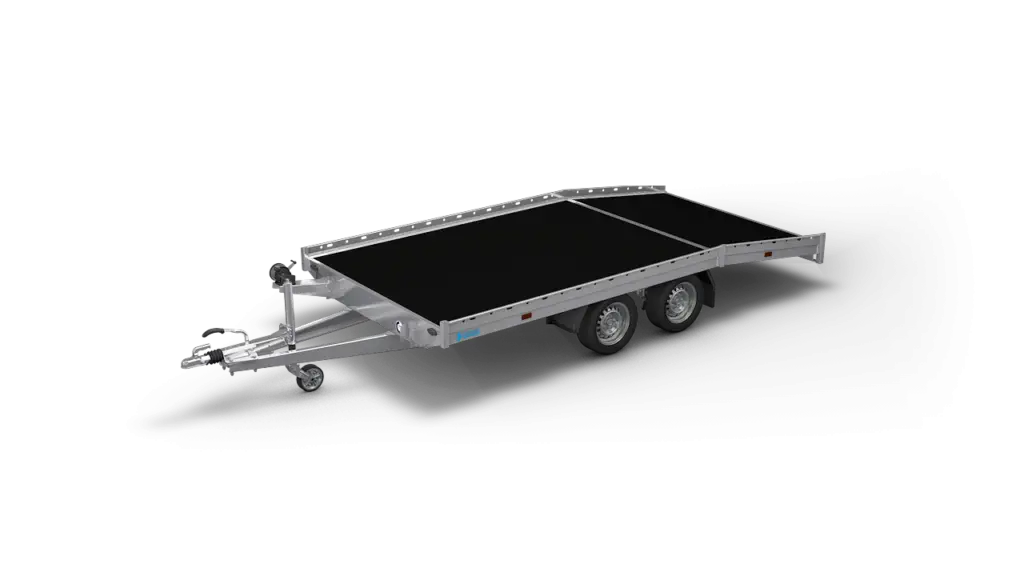
Tiltable transporter
HAPERTINDIGO
Vanaf 6340
or lease from € 151 / month
Multi-purpose box
HAPERTSAPPHIRE
Vanaf 3520
or lease from € 94 / month