


Different types of trailers explained: platform trailer, box trailer, tipper and car transporter
Choosing the right trailer is not always easy. There are different types, and each model is designed with a specific use in mind. Whether you transport construction materials, carry out landscaping projects, move vehicles or work with bulk materials every day: the type of trailer you choose determines how efficiently you can work. That is why it is important to understand which model best suits your activities. In this article, you will find the different types of trailers explained clearly and practically.
Platform trailer: maximum flexibility and a fully usable load area
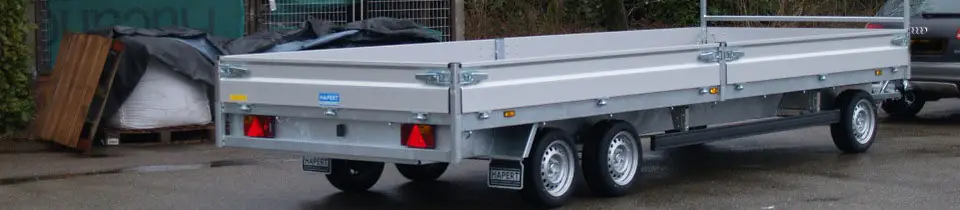
First, there is the platform trailer, one of the most versatile trailer types you can choose. Because the wheels are positioned underneath the load floor, you get a completely flat loading area that can be used across the full width. This makes the platform trailer particularly suitable for transporting large, wide or long materials such as timber, sheet material or pallets that can easily be loaded from the side.
Thanks to the drop sides and free access all around, this type is ideal for professionals who work daily with changing and bulky loads. When looking at the different types of trailers explained, the platform trailer stands out because of its loading flexibility and practical accessibility.
Box trailer: the practical all-rounder for daily use
Then there is the box trailer. This is the most recognisable and most commonly used type of trailer. With the wheels positioned beside the body, it offers an enclosed load area in which materials stay neatly together and can be transported safely.
This makes the box trailer ideal for all kinds of general work, such as transporting green waste, rubble, tools or construction materials. Thanks to its compact shape, ease of use and wide range of applications, this model is often chosen by DIY users, landscapers and smaller companies. In the overview of different types of trailers explained, the box trailer is the reliable all-rounder.

Tipper: the ideal solution for bulk materials and intensive work
For anyone who regularly works with heavy, loose materials, a tipper offers exceptional convenience. This type of trailer can tip backwards and, with some models, on three sides. This makes it possible to unload sand, gravel, soil or rubble quickly and in a controlled way.
The strong construction, combined with a hydraulic or electric tipping system, makes the tipper a smart choice for professionals working in groundwork, paving or landscaping who need to move large amounts of material every day. Among the different types of trailers explained, the tipper is the specialist for bulk materials and intensive use.

Car transporter: safely loading and transporting vehicles
The car transporter is specially designed for transporting vehicles. The long, low load floor makes it possible to drive cars onto the trailer with a minimal approach angle, or to use loading channels for vehicles that cannot drive by themselves.
Thanks to the optimal weight distribution and stable construction, the vehicle remains firmly in place, even on longer journeys or at higher speeds. This makes the car transporter a reliable choice for garages, traders, rental companies and car enthusiasts who want to transport vehicles safely and professionally. In this guide to different types of trailers explained, the car transporter is the logical choice for vehicle transport.

Which type suits your use?
Choosing the right trailer starts with understanding your own work. A platform trailer offers maximum load space and flexibility. A box trailer is the ideal all-rounder for various jobs. A tipper excels at quickly and efficiently handling bulk materials. A car transporter offers the safest solution for transporting vehicles.
By looking clearly at the load you transport and how intensively you use the trailer, you can make a choice that delivers safety and ease of use in practice. That is exactly why having the different types of trailers explained helps you make a better decision.
Once you know which trailer best suits your work, configure it directly on our website or find a dealer near you.